
Complete Land Rover History, Maintenance and Spare Parts Guide
Land Rover vehicles combine premium comfort, advanced technology, and legendary off-road capability, making them ideal for both city roads and desert adventures across the UAE. To keep your Defender, Range Rover, or Discovery performing at its best, proper maintenance and accurate diagnostics are essential.
This guide covers common Land Rover problems, fault codes, professional diagnostic procedures, high-demand spare parts, UAE-specific maintenance tips, and service recommendations. Whether you’re preventing costly repairs or sourcing the right replacement parts, you’ll find practical information to help maintain reliability, performance, and long-term value.
Table of Contents
- Land Rover Heritage: A Legacy Forged in Steel and Aluminium
- Understanding Your Land Rover Model Range
- 18 Common Land Rover Symptoms Every Owner Must Know
- Land Rover Diagnostic Trouble Codes (DTCs) Decoded
- Professional Diagnostic Procedures Explained
- Most In-Demand Land Rover Spare Parts in the UAE
- UAE-Specific Challenges for Land Rover Owners
- Climate-Adapted Maintenance Schedule for the UAE
- Land Rover Spare Parts Pricing (AED & USD)
- Genuine OEM vs. Aftermarket Parts — Making the Right Decision
- Full Service Interval Reference
- FAQs About Land Rover Ownership and Spare Parts
Land Rover Heritage: A Legacy Forged in Steel and Aluminium
From rugged farm vehicles to premium luxury SUVs, Land Rover has spent more than 75 years combining exceptional off-road capability with advanced engineering. Every generation has introduced innovations that shaped modern four-wheel-drive vehicles, making Land Rover one of the world’s most respected automotive brands.
From Utility to Global Icon (1948–1983)
Land Rover began in 1948 when the original Series I was introduced as a durable all-purpose vehicle for farming, military, and industrial use. Built with lightweight aluminium body panels, it quickly earned a reputation for reliability in the world’s harshest environments. The later Series II and Series III refined its design and capability, laying the foundation for the legendary Defender.
The Rise of Luxury SUVs (1970–2008)
The launch of the Range Rover in 1970 transformed the automotive industry by combining genuine off-road performance with premium comfort. Later, the Discovery expanded the lineup with practical family versatility, while the Freelander introduced the brand to compact SUV buyers. Following Tata Motors’ acquisition in 2008, Land Rover entered a new era of engineering, technology, and global growth.
Modern Innovation and Intelligent Capability
Today’s Land Rover range—including the Defender, Range Rover, Range Rover Sport, Discovery, and Discovery Sport—features advanced technologies such as Terrain Response, electronic air suspension, mild-hybrid powertrains, Pivi Pro infotainment, and over-the-air software updates. For UAE owners, understanding these sophisticated systems is essential for accurate maintenance, reliable performance, and sourcing the correct replacement parts.
Understanding Your Land Rover Model Range
Knowing which platform, engine, and generation your vehicle represents is the critical foundation for accurate diagnosis and correct parts sourcing.
Defender L663 (2020–Present)
The new Defender, available in 90, 110, and 130 body styles, represents Land Rover’s most significant engineering achievement in decades. Built on the D7x aluminium architecture, the L663 is fitted with Ingenium 2.0 and 3.0-litre petrol and diesel engines, an 8-speed ZF automatic gearbox, and available air suspension. The 90 and 130 variants are unique to this generation.
Range Rover L460 (2022–Present)
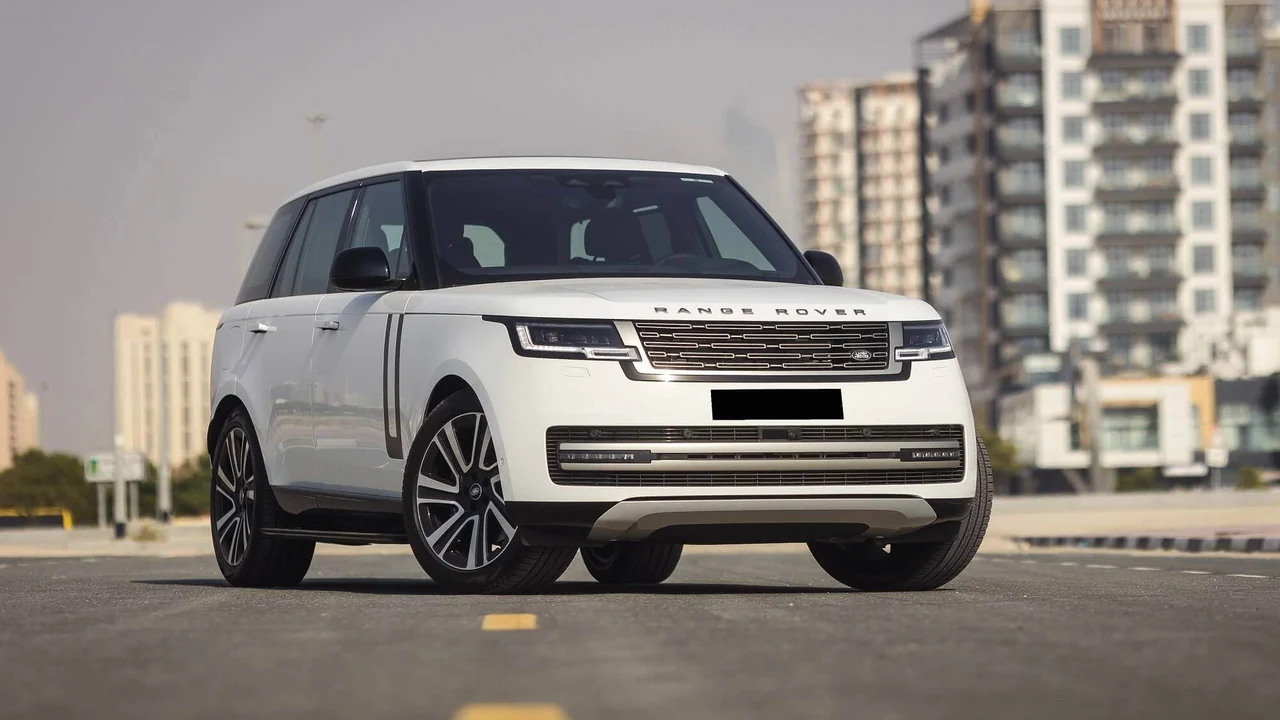
The fifth-generation Range Rover sits at the pinnacle of the Land Rover range. Available in standard and long-wheelbase body styles, the L460 is offered with a range of Ingenium six-cylinder and BMW-derived 4.4-litre V8 engines, all paired with air suspension as standard. A fully electric version is confirmed.
Range Rover Sport L461 (2022–Present)
The third-generation Range Rover Sport shares the MLA-Flex architecture with the L460 but in a sportier, slightly more compact body. Engine options mirror the L460, with the addition of the PHEV powertrain offering significant electric-only range.
Discovery L462 (2017–Present)
The fifth-generation Discovery moved to a lightweight aluminium monocoque body, making it significantly lighter than its predecessor. Fitted with Ingenium diesel and petrol engines and a seven-seat layout as standard, the L462 focuses on family versatility with genuine off-road ability.
Discovery Sport L550 (2015–Present)
The compact Discovery Sport replaced the Freelander and targets family SUV buyers. The Ingenium 2.0-litre diesel and petrol engines cover most markets, with mild hybrid variants available from 2020.
Range Rover Sport L320 / L494 (2005–2022)
Two generations of the performance-focused Range Rover Sport. The L320 (2005–2013) used the TDV6 and SDV6 diesel engines alongside 3.0 and 5.0-litre V8 petrols. The L494 (2013–2022) introduced the new Ingenium engine family alongside the SDV8.
Eighteen Common Land Rover Symptoms Every Owner Must Recognise
Land Rovers are reliable and capable machines when maintained correctly. Their sophistication, however, means that symptoms should be read carefully rather than dismissed. Here are the 18 most important warning signs UAE owners encounter, including what causes them and what happens if they are ignored.
- Air Suspension Fault: Overnight suspension sag or warning messages usually indicate leaking air springs, failing compressors, damaged airlines, or faulty height sensors requiring immediate inspection.
- Engine Overheating Warning: Rising coolant temperatures commonly result from faulty water pumps, cracked expansion tanks, blocked radiators, or thermostat failures, risking severe engine damage.
- Terrain Response Failure: An unresponsive Terrain Response system often points to switch, control module, or transfer case communication faults affecting off-road capability and safety.
- Jerky Gear Changes: Hesitation, harsh shifting, or gear hunting usually indicates degraded ZF transmission fluid, adaptive learning issues, or torque converter wear.
- High Oil Consumption: Frequent oil top-ups or blue exhaust smoke may signal worn piston rings or valve seals, particularly on Ingenium petrol engines.
- Parking Brake Fault: EPB warnings, failed engagement, or release problems typically result from worn actuators, brake sensors, or electronic control module faults.
- Panoramic Roof Leaks: Blocked roof drainage channels allow water into the cabin, damaging headliners, electrical components, and interior trim if left unattended.
- Drivetrain Whining Noise: Whining sounds during acceleration often indicate transfer case bearing wear, differential issues, or deteriorated PTU oil requiring prompt attention.
- AdBlue System Warning: Countdown messages usually result from low DEF fluid, injector blockages, dosing pump faults, or contaminated AdBlue affecting diesel operation.
- Battery Drain Issues: Rapid battery discharge and infotainment malfunctions commonly stem from weak AGM batteries, software faults, or excessive electronic standby loads.
- PTU Oil Leakage: Oil leaks around the Power Transfer Unit can cause bearing failure and expensive drivetrain repairs if low lubricant levels are ignored.
- Brake Sensor Alerts: False brake wear warnings may result from faulty sensors, making physical brake pad inspection essential before replacing any components.
- Weak Air Conditioning: Reduced cooling performance usually indicates refrigerant leaks, faulty blend door actuators, clogged filters, or failed ventilated seat components.
- Rear Suspension Knock: Clunking noises over speed humps often indicate worn shock mounts, suspension bushes, or anti-roll bar links needing replacement.
- Turbo Boost Loss: Reduced power and black exhaust smoke commonly result from leaking intercooler hoses, faulty MAP sensors, or failing turbo actuators.
- TPMS Sensor Failure: Persistent tyre pressure warnings usually indicate depleted TPMS sensor batteries, preventing accurate pressure monitoring and reducing driving safety.
- Fuel Injector Problems: Rough idle, hesitation, and increased fuel consumption often indicate dirty or worn injectors requiring balance testing, cleaning, or replacement.
- Sunroof Motor Fault: A sticking or noisy panoramic sunroof usually indicates worn motors or tracks, increasing the risk of water leaks and mechanism damage.
Land Rover Diagnostic Trouble Codes (DTCs) Decoded
Land Rover uses a layered diagnostic architecture that goes significantly deeper than the OBD2 protocol most generic code readers access. Below are the most commonly encountered codes, along with what they actually indicate.
DTC Code | System | Description | What It Means for Your Land Rover |
P0300–P0312 | Engine | Random/Multiple Cylinder Misfire | Ignition coil failure, degraded spark plugs, or fuel delivery fault. Immediate diagnosis prevents catalytic converter damage. |
P0171 / P0174 | Engine | System Too Lean – Bank 1 / Bank 2 | Vacuum leak, failing MAF sensor, or fouled injector. Causes rough running and long-term engine stress. |
P0087 | Engine | Fuel Rail Pressure Too Low | High-pressure fuel pump weakening or clogged fuel filter. Results in hard starting, hesitation, and misfires. |
P0420 / P0430 | Emissions | Catalyst Efficiency Below Threshold | Catalytic converter degradation, typically following unresolved misfires. Replacement is significant on V6 and V8 engines. |
P0562 | Electrical | System Voltage Low | Battery or charging system fault. Generates cascading false module errors across the CAN bus — always verify battery health first. |
P246C | Emissions | DPF Partially Blocked | Diesel particulate filter blockage from urban-only driving. Requires forced regeneration or replacement. |
C1A13 | Air Suspension | Compressor Fault | Air suspension compressor unable to maintain system pressure. Indicates motor wear, relay fault, or air leak. |
C1A00–C1A05 | Air Suspension | Individual Corner Height Sensor Fault | Height sensor data loss at one corner. Prevents correct levelling and triggers system fault. |
U0100 | Network | Lost Communication with ECM/PCM | Engine module offline due to low battery voltage or CAN network wiring fault. |
U0155 | Network | Lost Communication with Instrument Cluster | Dashboard data loss, typically accompanying battery or CAN bus faults. |
B10D7 | TPMS | Tyre Pressure Sensor Fault | Individual TPMS sensor battery failure. Masks genuine pressure changes — a safety concern. |
P0016 | Engine | Camshaft/Crankshaft Position Correlation | Timing chain stretch or VVT actuator fault on Ingenium engines. Requires immediate attention. |
U0401 | Network | Invalid Data from ECM/PCM | Modules receiving corrupted data, often triggered by low battery during module update. |
C1500 | Brakes | EPB Control Module Fault | Electronic parking brake module fault. Requires specialist module programming after repair. |
Critical Diagnostic Rule
Before diagnosing individual fault codes, perform a battery load test. Even a battery reading 12.4 volts at rest can cause multiple false fault codes under Land Rover’s high electronic load. Always use a Land Rover-compatible diagnostic scanner instead of a standard OBD2 reader, and record all active and stored fault codes before clearing them to accurately identify the root cause.
Professional Diagnostic Procedures Explained
Accurate diagnosis of Land Rover systems follows structured protocols. Here is what professional technicians perform for each primary system:
- Step 1: Scan All Vehicle Modules: Perform a full diagnostic scan covering the engine, transmission, ABS, airbag, body control, Terrain Response, and air suspension systems to detect stored and active faults.
- Step 2: Test Engine Performance: Analyse live fuel trim data, injector balance, and, for engines over 100,000 km, perform compression and leak-down tests to confirm internal engine health.
- Step 3: Inspect Transmission: Check transmission fluid condition, torque converter operation, hydraulic pressure, and perform a ZF 8HP adaptive reset after gearbox servicing.
- Step 4: Diagnose Air Suspension: Carry out pressure decay testing, compressor duty cycle analysis, and verify height sensor calibration to identify leaks or compressor faults.
- Step 5: Evaluate Cooling System: Pressure-test the cooling system, inspect the water pump and expansion tank, and verify thermostat operation using live diagnostic data.
- Step 6: Check Brakes & Suspension: Measure EPB motor performance, inspect suspension components, perform four-wheel laser alignment, and test adaptive dampers where fitted.
Most In-Demand Land Rover Spare Parts in the UAE
These are the components UAE Land Rover owners most frequently require, along with the key specifications for correct selection.
- Air Suspension Compressor: Runs continuously when failing, causing overheating and ride-height issues. Replace the compressor with a new relay and inspect all air line connections.
- Air Springs & Struts: Air spring bladders commonly fail after 80,000–100,000 km in UAE heat. Replacement restores ride height, stability, and requires height sensor recalibration.
- Water Pump Assembly: A critical cooling component in UAE conditions. Replace immediately if leaking and always install a new thermostat assembly at the same time.
- Primary & Auxiliary Radiators: Sand blocks radiator fins, reducing cooling efficiency. Clean annually and replace when more than 20% of the core is obstructed.
- Thermostat Assembly: A stuck-open thermostat reduces fuel economy, while a stuck-closed unit causes overheating. Ingenium engines require the complete thermostat housing assembly.
- ZF 8HP Service Kit: Use the correct ZF fluid, filter, pan gasket, and drain plug. Replace fluid immediately if it appears burnt or excessively dark.
- Ignition Coil Set: When one coil fails, replace the complete set on V6 and V8 petrol engines to prevent repeated misfires from ageing coils.
- Iridium Spark Plugs: Replace the complete set at the recommended interval to reduce ignition coil stress and prevent progressive engine misfires.
- Fuel Injectors: Fouled injectors reduce performance, increase smoke, and raise fuel consumption. Injector flow testing determines whether cleaning or replacement is required.
- PTU Seals & Oil: Replace leaking Power Transfer Unit seals before oil loss causes expensive bearing or internal PTU failure.
- Brake Pads & Sensors: Fit brake pads matched to Land Rover specifications and replace front and rear wear sensors together to avoid repeat repairs.
- EPB Motor Assembly: Electronic parking brake motors commonly fail on higher-mileage vehicles. Replacement requires EPB recalibration using a compatible diagnostic tool.
- Control Arms & Bushings: Worn bushings affect steering and tyre wear. On high-mileage vehicles, replacing the complete control arm assembly is usually more economical.
- OEM AGM Battery: Match the original CCA and Ah ratings Replace proactively every 3–4 years in the UAE to prevent electrical faults.
- Diesel Particulate Filter: Frequent city driving accelerates DPF blockage. Perform forced regeneration before blockage reaches replacement level.
- Intercooler Hoses: UAE heat hardens silicone hoses, causing boost leaks and power loss. Inspect hoses and clamps during every service.
- Front Differential Assembly: Off-road use accelerates bearing wear. A changing differential whine should be diagnosed early to prevent complete failure.
- Coolant Expansion Tank: Plastic expansion tanks commonly crack from repeated heat cycles. Proactive replacement around 80,000 km helps prevent sudden coolant loss.
UAE-Specific Challenges for Land Rover Owners
Owning a Land Rover in the UAE requires more frequent maintenance than factory schedules recommend. Extreme heat, desert sand, and high-speed driving accelerate wear across key components.
- Air Suspension: Road temperatures above 65°C accelerate wear on air springs and compressors. Inspect air lines and compressor health every 15,000 km.
- Brake Components: Fine desert sand contaminates brake calipers, discs, and wheel bearings. Inspect braking components during every annual service.
- AGM Battery: High temperatures shorten battery life. Perform an annual load test and replace the battery proactively every 4 years.
- PTU & Differential Oil: Extended highway driving raises drivetrain temperatures. Replace PTU oil every 30,000–40,000 km to prevent premature bearing wear.
- Suspension Geometry: Frequent speed humps accelerate bushing wear and wheel misalignment. Check four-wheel alignment every 15,000 km.
- Air Intake System: Replace engine air filters every 10,000–15,000 km and inspect intake hoses after desert driving to reduce engine wear.
- Cooling System: High temperatures degrade coolant additives faster. Flush and replace coolant every 2 years or 40,000 km to maintain reliable engine cooling and corrosion protection.
Land Rover Spare Parts Pricing (AED & USD)
The following price ranges represent current UAE market estimates for genuine OEM components. Prices vary by model year, specific variant, and supply chain.
Component | System | Est. Price (AED) | Est. Price (USD) |
Air Suspension Compressor | Suspension | AED 3,500 – 5,800 | $953 – $1,580 |
Air Spring / Strut (each) | Suspension | AED 4,500 – 7,500 | $1,225 – $2,040 |
Water Pump Assembly | Cooling | AED 1,800 – 3,500 | $490 – $953 |
Radiator (Primary) | Cooling | AED 4,000 – 8,000 | $1,090 – $2,180 |
Thermostat Assembly | Cooling | AED 800 – 1,800 | $218 – $490 |
ZF Gearbox Service Kit | Drivetrain | AED 1,200 – 2,200 | $327 – $599 |
Ignition Coil (each) | Electrical | AED 450 – 800 | $122 – $218 |
Spark Plug Set | Engine | AED 600 – 1,400 | $163 – $381 |
Fuel Injector (each) | Engine | AED 900 – 1,700 | $245 – $463 |
AGM Battery (OEM Spec) | Electrical | AED 1,200 – 2,200 | $327 – $599 |
EPB Motor Assembly | Braking | AED 1,500 – 2,800 | $409 – $763 |
Brake Pads – Front Axle | Braking | AED 1,200 – 3,000 | $327 – $817 |
DPF (Diesel Particulate Filter) | Emissions | AED 5,000 – 9,500 | $1,362 – $2,588 |
PTU Seal and Oil Kit | Drivetrain | AED 600 – 1,400 | $163 – $381 |
Coolant Expansion Tank | Cooling | AED 800 – 1,600 | $218 – $436 |
Intercooler Hose Set | Engine | AED 900 – 2,000 | $245 – $545 |
Control Arm (each) | Suspension | AED 1,500 – 3,500 | $409 – $953 |
Differential Assembly (Front) | Drivetrain | AED 8,000 – 16,000 | $2,180 – $4,358 |
Prices are indicative. Contact ARMotors directly for model-specific and variant-specific pricing on your Land Rover.
Genuine OEM vs. Aftermarket Parts — Making the Right Decision
Genuine OEM Parts
Manufactured to Jaguar Land Rover (JLR) specifications, genuine OEM parts offer exact fitment, verified quality, and full compatibility with your vehicle’s electronics. Their traceable part numbers and VIN matching ensure reliable performance, longer service life, and better resale value.
Premium Aftermarket Parts
Tier-1 manufacturers that also supply JLR produce high-quality aftermarket components. Parts such as oil filters, air filters, brake pads, belts, and coolant hoses can provide reliable performance and cost savings when sourced from reputable brands.
When OEM Is Essential
Always choose genuine OEM parts for air suspension, sensors, engine management, transmission components, braking systems, and other safety-critical or electronically controlled parts. Incorrect specifications can trigger faults, reduce reliability, and compromise vehicle performance.
Smart Buying Advice
Use premium aftermarket parts only for approved maintenance consumables. For critical systems, genuine OEM components remain the safest and most cost-effective long-term investment for Land Rover ownership in the UAE.
Quick Reference Comparison
Feature | Genuine OEM | Premium Aftermarket | Generic/Unbranded |
Fit and Specification | Exact to JLR spec | Variable by manufacturer | Unknown |
Reliability | JLR-validated | Brand-dependent | Inconsistent |
Electronic Compatibility | Guaranteed | High for top brands | Not guaranteed |
Warranty Coverage | 12–24 months | Variable | Typically minimal |
Cost | Premium | 25–50% lower | 50–70% lower |
Resale Value Impact | Maximum | Neutral | Negative |
Risk on Safety-Critical Systems | Minimal | Low to moderate | Moderate to high |
Factory-Grade Land Rover Repairs in the UAE
ARMotors delivers factory-grade Land Rover repairs across Dubai, Abu Dhabi, Sharjah, and the UAE, using advanced diagnostics and manufacturer-recommended repair procedures for every Land Rover model.
From engine, transmission, air suspension, and electrical repairs to cooling system diagnostics, we restore your vehicle to OEM standards with precision, reliability, and long-lasting performance. Book your Land Rover inspection with us today.
Frequently Ask Questions
Service your Land Rover every 7,500–10,000 km or every 6 months, whichever comes first. UAE heat, dust, and traffic accelerate wear, making shorter service intervals essential for maintaining engine performance, cooling efficiency, and long-term reliability.
Extreme UAE temperatures place extra strain on the cooling system. Common causes include coolant leaks, failing water pumps, blocked radiators, or thermostat faults. Prompt inspection helps prevent serious engine damage and costly repairs.
Yes! Genuine OEM parts are engineered to Land Rover specifications, ensuring proper fit, electronic compatibility, and long-term reliability. They also help maintain vehicle performance and reduce the risk of repeat repairs.
Generic OBD2 scanners read only basic engine faults. Land Rover-specific diagnostic equipment accesses air suspension, Terrain Response, transmission, body control, and other electronic modules, enabling faster, more accurate fault diagnosis and repairs.
Closing of the Guide
Owning a Land Rover in the UAE is a rewarding experience when maintenance matches the region’s demanding climate. Regular servicing, timely diagnostics, and attention to early warning signs help preserve performance, comfort, and off-road capability while reducing the risk of major repairs.
Understanding common faults, following climate-adapted service intervals, and choosing factory-grade repair procedures are essential for keeping every system operating as intended. Preventive maintenance is always more cost-effective than correcting avoidable mechanical failures.
Whether you drive a Defender, Range Rover, Discovery, or Discovery Sport, informed ownership is the key to long-term reliability. By caring for your vehicle proactively and addressing issues early, you can enjoy dependable performance, greater safety, and lasting value throughout every journey.