
Mercedes-Benz Owner’s Guide: Maintenance, Repairs & Spare Parts UAE
Owning a Mercedes-Benz in the UAE requires more than routine servicing. Extreme heat, desert dust, and heavy traffic place additional stress on critical components, making proactive maintenance essential.
This comprehensive guide covers Mercedes-Benz models, common warning signs, diagnostic trouble codes, professional diagnostic procedures, genuine spare parts, UAE-specific maintenance schedules, pricing, and expert ownership advice.
Whether you drive a C-Class, GLE, S-Class, G-Class, AMG, or Maybach, this guide helps you make informed decisions to improve reliability, reduce repair costs, and protect your vehicle’s and its resale value.
Table of Contents
- Mercedes Legacy
- Modern Mercedes Model Range
- Common Symptoms
- Diagnostic Trouble Codes
- Professional Diagnostics
- Most Common Spare Parts
- OEM vs Aftermarket
- UAE Maintenance Tips
- Service Intervals
- Spare Parts Pricing
- FAQs
The Legacy of Mercedes-Benz: From Innovation to Modern Performance
Mercedes-Benz has shaped the automotive industry for more than a century through pioneering engineering, motorsport success, and continuous innovation. From inventing the world’s first automobile to developing today’s luxury, performance, and electric vehicles, every generation has introduced technologies that continue to influence the global automotive market.
The Birth of the Automobile (1886–1926)
The Mercedes-Benz story began in 1886, when Carl Benz patented the Benz Patent-Motorwagen, widely recognised as the world’s first practical automobile. At the same time, Gottlieb Daimler and Wilhelm Maybach independently developed one of the first four-wheeled motor vehicles. Their companies merged in 1926 to create Daimler-Benz AG, introducing the iconic three-pointed star that represents mobility on land, sea, and air. Earlier, the 1901 Mercedes 35 PS had already redefined vehicle design with improved stability, handling, and engineering, earning recognition as the world’s first modern motor car.
Motorsport Innovation and the Silver Arrows
Mercedes-Benz built its engineering reputation through motorsport. During the 1930s, the legendary Silver Arrows Grand Prix cars dominated European racing, showcasing exceptional speed and advanced engineering. The brand continued pushing innovation with the 1954 300 SL Gullwing, which introduced the first production car equipped with fuel injection, a breakthrough that transformed engine performance and efficiency and later became standard across the automotive industry.
The AMG Era and Today’s Mercedes-Benz
Founded in 1967, AMG evolved from an independent performance specialist into Mercedes-Benz’s official high-performance division. Today, Mercedes-Benz offers a complete luxury lineup, including the C-Class, E-Class, S-Class, Maybach, EQ electric vehicles, and powerful AMG models. This broad range combines luxury, advanced technology, and performance, making model-specific expertise essential for accurate servicing and maintenance.
Understanding the Modern Mercedes Model Range
Precise model identification is the foundation of every correct diagnostic and parts decision. Mercedes uses platform codes and generation designations that are essential for specification accuracy.
S-Class (W223, 2020 to Present)
The flagship saloon and the vehicle in which Mercedes introduces technology that filters down to every other model in the range. The W223 S-Class introduced the MBUX second-generation infotainment system, a 12.8-inch portrait OLED central display, and the most sophisticated air suspension system in the Mercedes lineup.
Available with six-cylinder, eight-cylinder, and twelve-cylinder powertrains, and as the S 580 e plug-in hybrid. The long-wheelbase S-Class (V223) is the variant most commonly specified in the UAE market.
E-Class (W214, 2023 to Present)
The current W214 E-Class represents the most technology-dense midsize luxury saloon in the segment. Available in saloon and estate body styles, with four-cylinder and six-cylinder powertrains across standard and AMG variants. The W214 features MBUX Superscreen — a continuous display spanning the full dashboard width — and marks the first E-Class available as a fully software-defined vehicle.
GLE (V167, 2019 to Present)
Mercedes’ flagship mid-size luxury SUV and one of the most commonly registered premium SUVs in the UAE. The V167 GLE is available with four-cylinder, six-cylinder and eight-cylinder powertrains, with the GLE 450 and GLE 63 AMG covering the upper spectrum. The E-ACTIVE BODY CONTROL suspension system — which uses individual wheel-specific actuators to eliminate body roll almost entirely — is the most advanced optional suspension system available on any production SUV.
G-Class (W463A, 2018 to Present)
The G-Wagon. An icon that has been in continuous production since 1979 without a single year of interruption — the only vehicle in automotive history that can make that claim. The current W463A generation introduced an entirely new independent front suspension, a new nine-speed automatic gearbox, and a comprehensively revised interior while carefully preserving the angular exterior that has remained unchanged in its essential proportions for four decades. Available in standard, AMG 63, and the 585-horsepower V8 G 500 configuration.
C-Class (W206, 2021 to Present)
The entry point to the Mercedes range and the world’s best-selling luxury compact saloon. The W206 generation introduced the portrait central display and MBUX second-generation system — both originally from the S-Class — to the compact segment, alongside standard 48V mild-hybrid technology across the range. Available in saloon, estate, coupe, and cabriolet body styles.
Mercedes-Maybach S-Class (Z223)
The ultimate expression of Mercedes luxury, positioned above the standard S-Class with an extended wheelbase exclusive to the Maybach variant, individual rear seating with footrests, a rear-axle steering system that improves low-speed manoeuvrability, and interior specification that rivals the finest hotel suites. The V12 engine, discontinued in most of the range, remains available in the Maybach S 680 specifically for the UAE and Gulf market.
18 Common Mercedes Symptoms Every Owner Must Recognise
Understanding these warning signs early protects your investment and prevents small faults from becoming serious failures. Mercedes engineering is sophisticated enough that the car will often warn you before a fault becomes critical — if you know what to look for.
- Suspension Sagging: One corner sits lower or an AIRMATIC warning appears, usually indicating an air strut, compressor, or air line leak.
- Reduced Ride Comfort: Increased body movement over bumps often points to Magic Body Control sensor, camera, or suspension actuator faults.
- Engine Roughness: Rough idling, vibration, or cylinder misfires commonly result from worn spark plugs, faulty ignition coils, or injector issues.
- Gear Shift Hesitation: Juddering or delayed gear changes usually indicate deteriorated transmission fluid or early 9G-TRONIC gearbox adaptation issues.
- Infotainment Malfunctions: Screen freezes, slow startup, or connectivity problems typically require software updates or electronic module resets.
- Battery Drain: Frequent battery discharge and multiple electronic warnings often indicate AGM battery deterioration or CAN network communication faults.
- Weak Air Conditioning: Reduced cooling performance usually results from refrigerant leaks, compressor issues, or restricted cabin air filters.
- Engine Overheating: Rising coolant temperature or overheating warnings commonly indicate water pump, thermostat, or radiator cooling system problems.
- Parking Sensor Errors: False obstacle alerts or sensor failures are often caused by dust buildup or malfunctioning radar and ultrasonic sensors.
- Parking Brake Issues: Warning lights, grinding sounds, or poor holding ability usually indicate an electronic parking brake actuator fault.
- Traction System Warning: 4MATIC alerts or reduced grip often point to transfer case, clutch actuator, or drivetrain sensor problems.
- Interior Wear Signs: Leather cracks and dashboard damage develop from prolonged UV exposure without regular conditioning and interior protection.
- Soft Brake Pedal: Spongy brakes or vehicle pulling during braking may indicate hydraulic leaks, trapped air, or sticking brake calipers.
- Power Loss: Reduced acceleration with lean fuel conditions often results from vacuum leaks, airflow sensor faults, or fuel delivery issues.
- Body Roll Increase: Excessive leaning or suspension clunks commonly indicate Active Curve System hydraulic or anti-roll bar actuator faults.
- Unusual Engine Noise: New engine, turbo, or exhaust sounds often signal intake leaks, exhaust damage, or worn mounting components.
- Slow Window Operation: Windows moving slowly or reversing unexpectedly usually indicate failing window regulators or weakened electric window motors.
- TPMS Warning Light: Persistent tyre pressure alerts or static readings often indicate depleted TPMS sensor batteries or sensor failure.
Mercedes Diagnostic Trouble Codes Decoded
Mercedes-Benz uses a diagnostic architecture significantly deeper than the generic OBD2 standard. The most meaningful fault data is stored in manufacturer-specific module codes accessible only through Mercedes-compatible professional diagnostic platforms, specifically the XENTRY/DAS system or equivalent professional tools with full Mercedes coverage.
DTC Code | System | Description | What It Means for Your Mercedes |
P0300–P0308 | Engine | Random or Multiple Cylinder Misfire | Individual coil pack failure or spark plug fouling on V6, V8 or straight-six engines. A single faulting cylinder on an eight-cylinder AMG engine can be partially compensated by engine management — early diagnosis prevents catalytic converter damage. |
P0171 / P0174 | Engine | Fuel System Lean Bank 1 and Bank 2 | Vacuum leak downstream of the MAF sensor, a deteriorating MAF itself, or injector delivery imbalance. Biturbo applications additionally warrant intake boost pressure verification — a split charge pipe produces an identical lean code pattern. |
P0087 | Fuel System | Fuel Rail Pressure Too Low | High-pressure fuel pump output declining below specification. Symptoms appear under full acceleration load before idle is affected. Common on higher-mileage direct-injection engines with significant carbon deposit accumulation. |
P0420 / P0430 | Emissions | Catalyst Efficiency Below Threshold | Catalytic converter degradation on one exhaust bank. Almost always follows an unresolved misfire — prevention through ignition system maintenance is vastly more cost-effective than catalytic converter replacement on a biturbo V8 or V12. |
P0562 | Electrical | System Voltage Low | Battery or alternator output deficiency generating cascading false errors across the CAN network. Verify battery health under load before investigating individual module faults — this single step eliminates the majority of multi-system warning patterns. |
U0100 | Network | Lost Communication with ECM/PCM | Engine control module offline. Most commonly follows a battery discharge event or a software update that was interrupted by power loss. Module reprogramming via XENTRY is the standard resolution. |
C249B | Air Suspension | AIRMATIC Compressor Fault | Air suspension compressor unable to build or maintain system pressure. Indicates motor wear, relay failure, or a significant leak in the supply circuit. Do not delay diagnosis — a failed compressor deflating an air strut causes secondary damage rapidly. |
C2405 | Air Suspension | Level Sensor Plausibility Fault | Individual corner height sensor reading outside expected range. Prevents correct air spring filling and generates a system fault. Height sensor calibration is mandatory after any air spring or compressor service. |
C1500 | Brakes | EPB Control Module Communication Fault | Electronic parking brake module communication loss. Requires module programming after hardware repair. Do not attempt to defeat the EPB manually — the automatic hold function is integrated with the vehicle’s electronic stability system. |
B1001 | Body Electronics | Control Module Internal Error | Body control module fault, most commonly generated by prolonged low battery voltage. Module reset procedure through XENTRY resolves the majority of cases without hardware replacement. |
P0016 | Engine | Camshaft and Crankshaft Correlation | Timing chain stretch or variable valve timing actuator fault. Requires immediate investigation on all Mercedes engines — timing component failures produce catastrophic engine damage with very little warning. |
P015B | Fuel System | O2 Sensor Slow Response | Oxygen sensor response time outside specification. Affects fuel trim accuracy and long-term combustion efficiency. Common on vehicles driven predominantly in short-trip stop-start urban conditions where sensors do not reach full operating temperature consistently. |
4B00 (XENTRY) | Cooling | Coolant Temperature Sensor Implausible | Coolant temperature sensor reading outside expected range. May mask actual overheating events — always verify with live coolant temperature data stream before clearing this code. |
A038 (XENTRY) | Transmission | 9G-TRONIC Adaptive Values Not Learned | Gearbox adaptive shift map has been reset or not completed. Always perform a full adaptive drive cycle after transmission fluid service, failure to do so produces shift quality symptoms that mimic gearbox hardware faults. |
Any multi-system fault pattern must begin with battery health verification under load, not with individual module investigation. A marginal battery generates CAN communication errors that mimic module failures accurately enough to mislead even experienced technicians.
Professional Diagnostic Procedures Explained
Accurate Mercedes-Benz repairs begin with advanced diagnostics, not guesswork. Using manufacturer-level equipment and model-specific procedures allows technicians to identify faults quickly, verify component performance, and recommend the correct repair before problems become more serious.
Engine & Powertrain Diagnostics
Technicians perform a complete system scan, monitor live engine data, test injector performance, and carry out compression or leak-down tests to accurately diagnose engine and powertrain faults.
Transmission Performance Testing
The 9G-TRONIC transmission is evaluated through adaptive learning, shift quality analysis, torque converter monitoring, and hydraulic pressure testing to ensure smooth, reliable gear operation.
AIRMATIC Suspension Inspection
Air suspension diagnostics include pressure retention testing, compressor performance analysis, leak detection, and ride-height sensor calibration to restore comfort, stability, and correct suspension operation.
Cooling System Evaluation
Cooling components are pressure-tested while live temperature data is monitored to detect coolant leaks, overheating risks, restricted flow, or thermostat and water pump performance issues.
Brake & Chassis Assessment
Brake performance, wheel alignment, electronic parking brake operation, adaptive dampers, and chassis control systems are inspected to maintain safe handling, stability, and precise driving dynamics.
Most In-Demand Mercedes-Benz Spare Parts in the UAE
The UAE’s extreme heat, dust, and stop-start driving conditions increase wear on several Mercedes-Benz components. Replacing these parts with genuine or OEM-quality replacements helps maintain reliability, performance, and long-term vehicle value.
- AIRMATIC Compressor: Maintains air suspension pressure for smooth ride quality. Inspect air lines during replacement to prevent premature compressor failure.
- Air Struts & Springs: Restore ride height and comfort. Recalibration is essential after replacement for proper suspension performance.
- Water Pump: Circulates coolant efficiently to prevent overheating. Replace with the thermostat for improved cooling system reliability.
- Radiator & Intercooler: Ensure efficient engine cooling and turbo performance. Regular cleaning removes sand and debris common in UAE conditions.
- Thermostat Assembly: Regulates engine operating temperature, preventing overheating, poor fuel economy, and excessive engine wear.
- 9G-TRONIC Service Kit: Includes genuine transmission fluid, filter, and gasket to maintain smooth shifting and gearbox longevity.
- Ignition Coils: Deliver consistent spark across all cylinders. Replacing the complete set improves engine performance and reliability.
- Iridium Spark Plugs: Enhance combustion efficiency, fuel economy, engine power, and protect ignition components from excessive load.
- Fuel Injectors: Restore accurate fuel delivery for smoother performance, improved efficiency, and reduced engine hesitation.
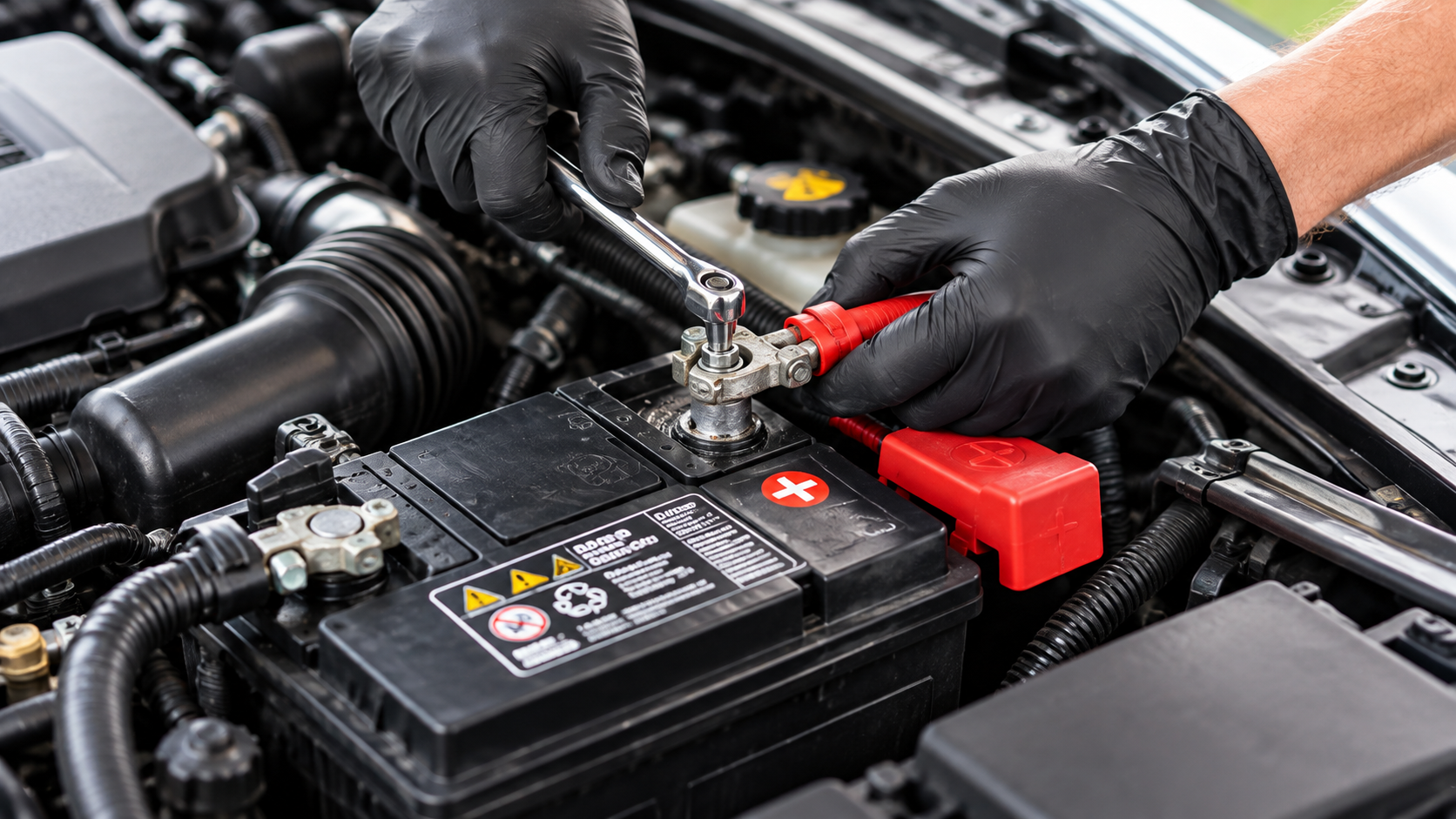
- AGM Battery: Supports advanced Mercedes electronics and reliable starting, especially in high-temperature UAE environments.
- Electronic Parking Brake Actuator: Restores proper parking brake operation, automatic hold function, and dashboard warning clearance.
- Brake Pads & Sensors: Provide dependable braking performance while ensuring accurate brake wear monitoring and maximum safety.
- Cabin Air Filters: Improve cabin air quality and air conditioning efficiency by blocking fine dust and desert particles.
- Window Regulator Assembly: Restores smooth power window operation and maintains proper door seal alignment.
- Door Lock Actuator: Ensures reliable central locking, soft-close functionality, and secure door operation.
- Coolant Expansion Tank: Prevents coolant leaks caused by heat-related cracks and protects the engine from overheating.
- Adaptive Dampers: Maintain ride comfort, stability, and responsive handling across different driving modes.
- Transfer Case & Differential Fluid: Protect 4MATIC drivetrain components, reduce wear, and ensure smooth all-wheel-drive performance.
Mercedes-Benz Maintenance Tips for UAE Conditions
The UAE’s extreme heat, desert dust, heavy traffic, and frequent speed humps place greater stress on Mercedes-Benz vehicles than standard factory maintenance schedules anticipate. Following a climate-adapted maintenance routine helps improve reliability, preserve performance, and reduce the risk of costly repairs.
- Service engine oil and filters every 7,500–10,000 km or 6 months using the correct Mercedes-approved lubricant.
- Inspect AIRMATIC suspension every 15,000 km for leaks, compressor performance, and ride-height consistency.
- Replace cabin air filters every 10,000–15,000 km to maintain cooling efficiency and cabin air quality.
- Inspect engine air filters regularly, especially if driving in dusty or desert environments.
- Check battery health annually with a professional load test, as UAE temperatures significantly shorten AGM battery lifespan.
- Perform four-wheel alignment every 15,000 km to minimise tyre wear and suspension stress caused by speed humps.
- Flush coolant every two years to maintain corrosion protection and prevent overheating in high temperatures.
- Service the 9G-TRONIC transmission, transfer case, and differential fluids according to UAE driving conditions for smoother operation and drivetrain longevity.
- Inspect radiators, intercoolers, and cooling components regularly to remove accumulated sand and maintain optimal engine temperatures.
- Condition leather interiors every six months and use covered parking whenever possible to reduce UV and heat damage.
- Replace tyres within five years, regardless of tread depth, as prolonged heat accelerates rubber deterioration.
- Carry out a comprehensive Mercedes diagnostic scan during scheduled services to detect hidden electronic or mechanical faults before they become major repairs.
Mercedes Spare Parts Pricing (AED and USD)
The following price ranges represent UAE market estimates for genuine OEM components across current Mercedes-Benz models. Prices vary by specific model, generation, engine variant, and AMG specification.
Component | System | Est. Price (AED) | Est. Price (USD) |
AIRMATIC Compressor | Suspension | AED 4,500 – 8,000 | $1,225 – $2,180 |
Air Strut (each) | Suspension | AED 5,500 – 10,000 | $1,498 – $2,724 |
Water Pump Assembly | Cooling | AED 3,500 – 7,000 | $953 – $1,906 |
Radiator (Primary) | Cooling | AED 6,000 – 12,000 | $1,634 – $3,268 |
Thermostat Assembly | Cooling | AED 1,500 – 3,500 | $408 – $953 |
9G-TRONIC Service Kit | Drivetrain | AED 2,000 – 4,000 | $545 – $1,090 |
Ignition Coil Set (6 or 8 units) | Electrical/Engine | AED 3,500 – 7,500 | $953 – $2,042 |
Iridium Spark Plug Set | Engine | AED 1,800 – 3,500 | $490 – $953 |
Fuel Injector (each) | Engine | AED 1,800 – 3,800 | $490 – $1,035 |
AGM Battery (OEM) | Electrical | AED 3,000 – 5,500 | $817 – $1,498 |
EPB Actuator Assembly | Braking | AED 2,500 – 5,000 | $681 – $1,362 |
Brake Pads – Front Axle | Braking | AED 2,800 – 6,000 | $763 – $1,634 |
Cabin Air Filter Set | HVAC | AED 400 – 900 | $109 – $245 |
Power Window Regulator | Body | AED 2,500 – 5,000 | $681 – $1,362 |
Door Lock Actuator and Latch | Body | AED 3,000 – 6,500 | $817 – $1,770 |
Coolant Expansion Tank | Cooling | AED 1,500 – 3,000 | $408 – $817 |
Adaptive Damper Unit (each) | Suspension | AED 3,500 – 7,500 | $953 – $2,042 |
PTU and Diff Oil Service Kit | Drivetrain | AED 900 – 2,000 | $245 – $545 |
Note: Prices are indicative UAE market estimates. Contact your authorised parts supplier for model-specific and variant-specific pricing on your Mercedes-Benz.
Genuine OEM vs Aftermarket Mercedes-Benz Parts
Choosing the right replacement parts directly affects your Mercedes-Benz’s reliability, performance, and long-term value. While premium aftermarket parts can suit some maintenance items, genuine OEM components remain the best choice for critical systems.
Genuine Mercedes-Benz OEM Parts
Genuine OEM parts are engineered to Mercedes-Benz specifications, ensuring precise fit, reliable performance, and full compatibility with electronic, suspension, braking, and engine systems. They deliver the durability, safety, and driving experience the vehicle was originally designed to provide.
When Premium Aftermarket Parts Are Suitable
High-quality aftermarket parts from trusted manufacturers such as Mahle, Bosch, and Brembo can be a cost-effective option for consumables like filters, spark plugs, and brake components. However, critical components including sensors, suspension parts, transmission components, and electronic modules should always be replaced with genuine OEM parts to maintain factory performance and reliability.
Feature | Genuine OEM | Tier-1 Aftermarket | Generic Aftermarket |
Engineering Specification | Exact to MB specification | High quality, may vary slightly | Unknown |
Electronic System Compatibility | Guaranteed | High for documented brands | Not guaranteed |
Refinement Impact | Neutral — maintains character | Minor variation possible | Potentially significant |
Warranty Coverage | 12 to 24 months factory | Variable by supplier | Minimal |
Cost | Premium | 20 to 45% lower | 50 to 70% lower |
Resale Value Impact | Maximum retention | Minimal negative | Measurable negative |
Recommended Application | All safety and electronic systems | Consumable filters only | Not recommended |
Full Service Interval Reference
Service Item | Factory Interval | UAE-Adapted Interval |
Engine Oil and Filter | 25,000 km / 24 months | 10,000 km / 6 months |
Cabin Air Filter | 20,000 km / 12 months | 10,000 km |
Engine Air Filter | 40,000 km | 15,000 to 20,000 km |
Spark Plugs (Iridium) | 60,000 km | 40,000 km |
Coolant Flush | 5 years | 2 years / 40,000 km |
Brake Fluid | 2 years | Annually |
9G-TRONIC Gearbox Fluid | Lifetime / 120,000 km | 40,000 to 60,000 km |
PTU and Differential Oil | 120,000 km | 40,000 to 60,000 km |
AIRMATIC Full Inspection | 30,000 km | 15,000 km |
AGM Battery Load Test | 3 years | Annually |
Four-Wheel Laser Alignment | 40,000 km | 15,000 km |
Fuel Filter | 50,000 km | 40,000 km |
Brake Pad Measurement | Annually | Every 15,000 km |
Leather Conditioning | Annually | Every 6 months |
Roof Drainage Channel Flush | Annually | Every 6 months |
Tyre Age Assessment | 6 years | 5 years maximum |
Schedule Your Mercedes Diagnostic Diagnostic Scan at Trusted Workshop
Your Mercedes-Benz deserves engineering care that matches its heritage. Don’t wait for a warning light to compromise your drive—protect your investment with the UAE’s premier luxury vehicle specialists. Let the certified master technicians at ARMotors handle everything from precision diagnostics to climate-adapted servicing. Book Your elite Mercedes service at UAE leading auto repairs today.
Frequently Ask Questions
Engine oil and filter should be changed every 10,000 km or six months in UAE conditions, significantly shorter than the factory extended interval. Cabin air filters warrant replacement every 10,000 km given UAE particulate levels. ZF gearbox fluid should be serviced every 40,000 to 60,000 km at most.
Overnight corner sag indicates pressure loss in one or more air circuits, most commonly a micro-perforated air strut bladder, a leaking push-fit air line, or a compressor unable to maintain system pressure. UAE heat accelerates bladder degradation. A pressure decay test precisely identifies the leak source before secondary damage occurs.
The battery must precisely match the CCA and Ah specification for your specific model and build year. Mercedes biturbo engines and extensive always-on electronics impose exact peak current demands. A sub-specification battery generates voltage irregularities during high-draw events that create cascading false module errors and degrade long-term electronic reliability.
A generic OBD2 reader accesses only engine and emissions modules, a fraction of total Mercedes diagnostic data. AIRMATIC control modules, individual door actuators, EPB module, adaptive damper control, and 4MATIC transfer unit modules all require Mercedes XENTRY or an equivalent professional platform to access accurately.
Mercedes multi-layer paint is durable but vulnerable to UAE UV intensity and silica abrasion. A professional-grade ceramic coating provides the best long-term protection. Always wash using the two-bucket method with clean water, never automatic car washes, whose rotating brushes carry abrasive residue from previous vehicles and cause micro-scratching.
Wrapping Up
Maintaining a Mercedes-Benz in the UAE’s demanding environment requires shifting from standard factory intervals to climate-adapted care. From diagnosing complex XENTRY module codes to preserving advanced AIRMATIC suspension systems, proactive upkeep protects both your vehicle’s performance and its long-term resale value.
Choosing genuine OEM components over generic aftermarket parts ensures your vehicle continues to perform with its intended engineering precision. By addressing warning signs early and adhering to a dedicated maintenance schedule, you safeguard the century-long heritage of luxury and motorsport innovation engineered into your vehicle.
Partnering with specialist technicians who possess deep model-specific expertise is the ultimate investment for any Mercedes owner. Trusting your vehicle to dedicated professionals ensures that advanced diagnostic procedures, climate-resilient servicing, and precision repairs keep your drive seamless across the Emirates.